Search Alabama Family Court Records
Alabama family court records are maintained by Circuit Court Clerks in each of the state's 67 counties. These records document divorce proceedings, child custody arrangements, child support orders, paternity determinations, and protection from abuse cases. The Circuit Courts have jurisdiction over domestic relations matters pursuant to Alabama Code § 12-17-24.2. Certain judicial circuits have established Family Court divisions with dedicated judges handling all family law cases. The Alacourt Access system provides statewide electronic access to trial court records. Interested parties may request copies from the Circuit Clerk's office in the county where the case was filed.
Alabama Family Court Records at a Glance
Primary Access Methods
Alacourt Access (Statewide Database)
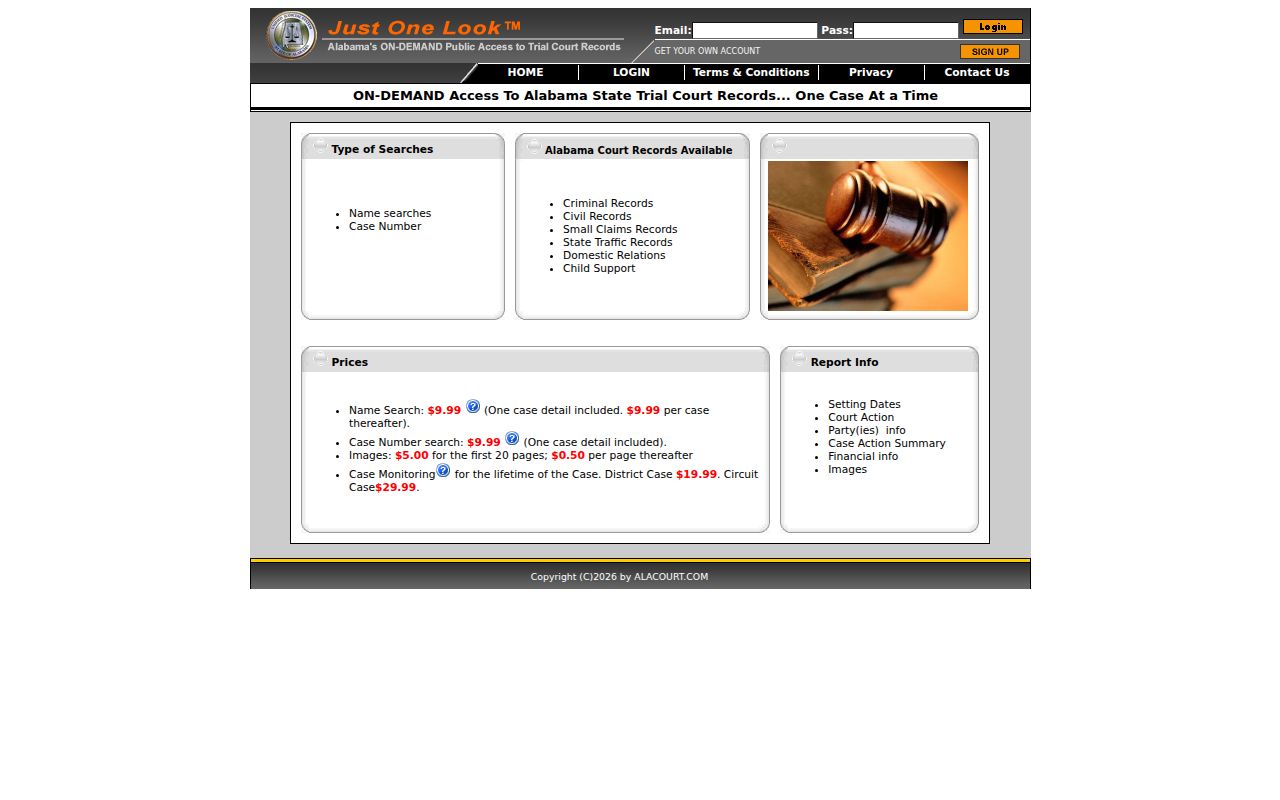
The Alacourt Access system at https://pa.alacourt.com/ lets you search trial court files from all Alabama counties. You need a paid account to use it. The database has civil, domestic, criminal, and traffic cases. You can search by name or case number. Some files have scanned images of court papers if the county put them online. Sealed records are not on this site. Child custody case details got restricted in January 2025. Many old records might not be online yet, so you may need to call the clerk's office if Alacourt does not have what you need.
Circuit Court Clerk Offices
Each county Circuit Clerk keeps the files for family court cases in that county. You can ask for records in person, by mail, or by phone. The clerk can give you certified copies of divorce papers, custody orders, and other court files. You have to pay for searches and copies. Fees vary by county. Most clerks take cash, checks, and money orders. Some take credit cards. If you need old paper records, go to the courthouse where the case was filed. The clerk staff can pull the file for you to look at during business hours.
AlaFile Electronic Filing System
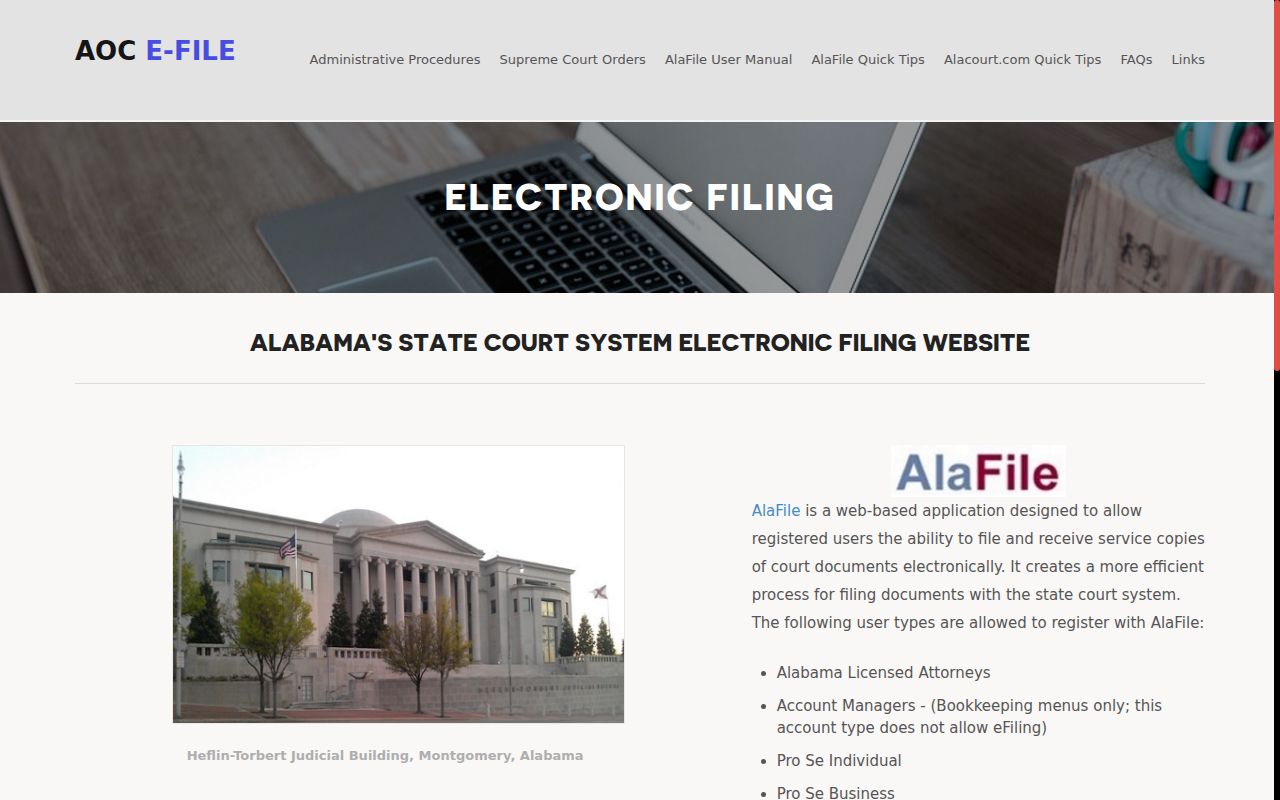
The AlaFile portal at https://efile.alacourt.gov/ lets lawyers and people without lawyers file court papers online. You need an account to use it. Once you sign up, you can submit documents and get served online. You can also access files in your case. This system is for people involved in a case, not for the general public looking up records. If you just want to search for old family court records, use Alacourt Access instead.
Fees and Costs
Records Request Fees
Fees for family court records vary by county. Each clerk sets their own rates. Here are general ranges seen across Alabama:
- Search Fee: $0 to $25 depending on county
- Copy Fee: Generally $0.50 per page for standard copies
- Certified Copies: $3 to $5 per document plus per-page copying fees
- Alacourt Subscription: Monthly or annual subscription fees apply
Call the clerk in your county for current fees. Most clerks take cash, checks, or money orders. Some counties take credit or debit cards but not all. Bring multiple payment options if you go in person. If you mail in a request, send a check or money order. Do not mail cash.
Vital Records Fees
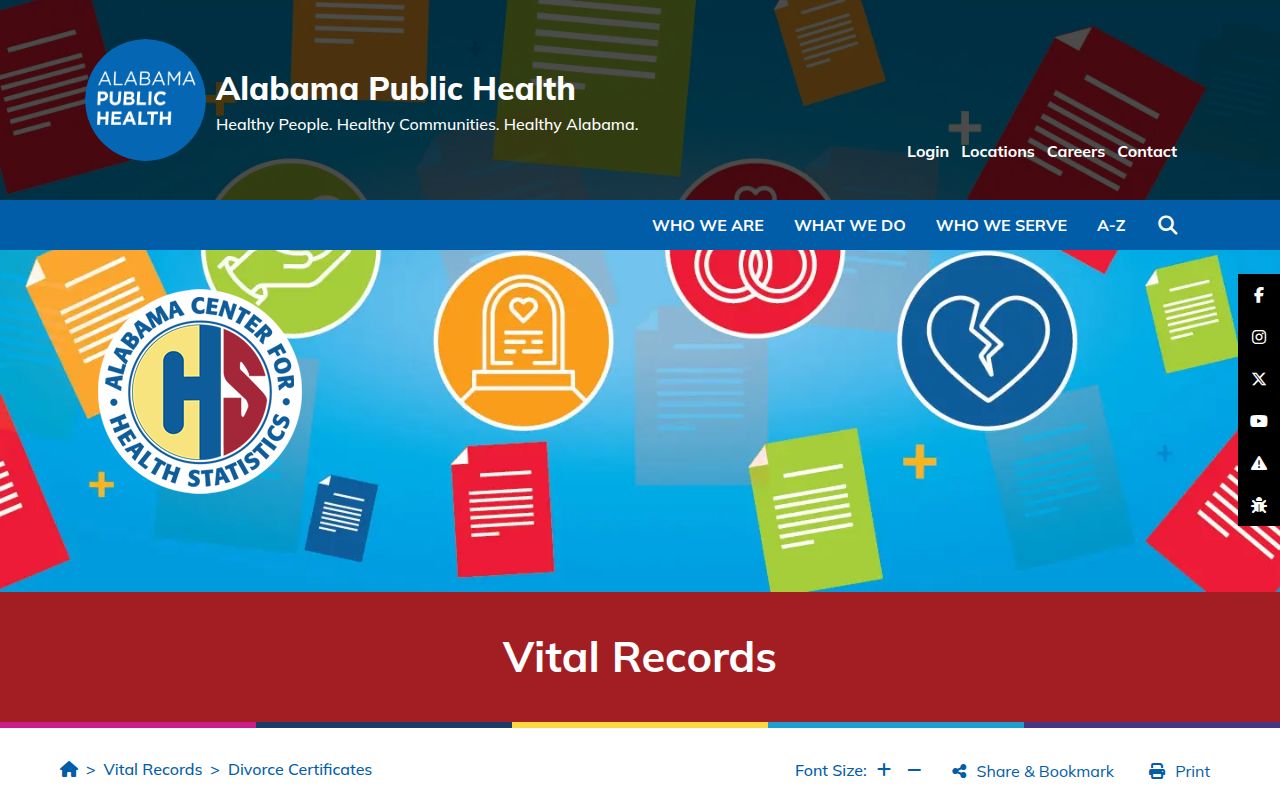
The Alabama Department of Public Health charges $15 for a divorce certificate search, which includes one certified copy or a certificate of failure to find. Additional certified copies are $6 each. These fees apply whether requesting by mail or online through VitalChek.
Secondary Sources
Vital Records (Marriage and Divorce Certificates)
The Alabama Department of Public Health keeps marriage records from August 1936 and divorce records from January 1950. These vital records just prove a marriage or divorce took place. They do not have details about the court case or who got custody. You can get these records three ways. Mail your request to P.O. Box 5625, Montgomery, AL 36103-5625. Call (334) 206-5418 during business hours. Or order online through VitalChek at https://www.vitalchek.com/. County health departments can also help you get these records. VitalChek is faster but costs more due to service fees.
Probate Court Records
County Probate Courts keep files for adoptions, guardianships, conservatorships, name changes, and marriage licenses. Adoption records are sealed by law. You cannot see them without a court order. Guardianship and conservatorship records may also be sealed if they involve minors or private medical details. These records stay at the Probate Judge's office in each county courthouse. You have to go to the right county to find the records you need.
Child Support Enforcement Records
The Alabama Department of Human Resources runs the Child Support Enforcement Division. They track child support orders and payment history. They also handle enforcement when someone does not pay. Only people involved in the case can access these records. You cannot look up someone else's child support records unless you are authorized. Visit https://dhr.alabama.gov/child-support-enforcement-division/ for more details. If you need to set up or modify child support, this is where you start.
Tertiary and Historical Sources
Appellate Court Records
Some family law cases get appealed to higher courts. The Alabama Court of Civil Appeals or Alabama Supreme Court may hear these appeals. You can access these cases through the Appellate Courts Public Portal at https://publicportal.alappeals.gov/. Court opinions and case files are online for free. You can view them or download them. These appellate records are public even if the trial court records are sealed, but the court may redact sensitive details.
Alabama Department of Archives and History
Old court records sometimes end up at the Alabama Department of Archives and History in Montgomery. This is where counties send very old files to preserve them. Visit https://archives.alabama.gov/ to search their holdings. People doing family history research use this archive a lot. If you need a divorce record from the 1800s or early 1900s, the archives might have it even if the county clerk does not. Call ahead to see if they have what you need before you make the trip.
Some family law cases end up in federal court. Interstate custody disputes under the Parental Kidnapping Prevention Act may be filed there. Federal child support enforcement cases can also be federal court matters. These federal records are in the PACER system at https://pacer.uscourts.gov/. You have to set up a PACER account and pay per page to view files. Alabama has three federal court districts: Northern, Middle, and Southern. Most family law cases stay in state courts, not federal courts.
Legal Framework
Family Court Jurisdiction
Family Court divisions handle divorces, annulments, legal separations, child custody and support, alimony, and other domestic matters. Alabama Code § 12-17-24.2 sets out this jurisdiction. Not all counties have Family Court divisions. They exist in the 6th, 7th, 10th, 13th, 15th, 20th, 23rd, and 37th Judicial Circuits as allowed by § 12-17-24.1. If your county does not have a Family Court division, the regular Circuit Court still handles these cases.
Divorce and Custody Statutes
Alabama law lists grounds for divorce in Alabama Code § 30-2-1. You must live in Alabama for six months before you can file for divorce here. That rule is in § 30-2-4. Child custody decisions follow § 30-3-1. Courts must consider what is best for the child. Joint custody rules are in § 30-3-160 through § 30-3-169.4.
Interstate Matters
Alabama follows the Uniform Child Custody Jurisdiction and Enforcement Act (UCCJEA). This law is in Title 30, Chapter 3A. It decides which state has the right to handle custody when parents live in different states. The Uniform Interstate Family Support Act (UIFSA) is in Title 30, Chapter 3B. That law covers child support when parents live in different states. These laws help prevent parents from forum shopping for a better result in another state.
Protection from Abuse
Alabama Code Title 30, Chapter 5 covers protection from abuse orders. These are also called PFAs or restraining orders. You can file a petition with the Circuit Court if you are a victim of domestic violence. Most counties do not charge a filing fee for these. The court can issue a temporary order right away if you are in danger. A hearing will be set later for a final order.
Privacy and Public Access
Court Record Privacy Rules
New privacy rules took effect on January 1, 2025. These rules seal "wholly private family matters" from public view. You need a court order to see them. Child custody records are now automatically sealed. This means you cannot look up someone else's custody case on Alacourt or at the courthouse. Personal details like social security numbers, bank account info, and medical records get redacted from public documents. These privacy rules aim to protect children and families.
Confidential Records
The following record types are confidential and not available to the general public:
- Adoption proceedings (sealed by statute under Title 26, Chapter 10A)
- Juvenile court records (confidential under the Alabama Juvenile Justice Act, Title 12, Chapter 15)
- Child custody case details (sealed effective January 1, 2025)
- Domestic violence victim location information
Public Records Law
Alabama Code § 36-12-40 is the state's public records law. It gives you the right to see or copy public records from courts and agencies. But some records are exempt. The law carves out exceptions for sealed and confidential files. Family court records fall into a gray area now due to the 2025 privacy rules.
Step-by-Step Records Request Process
Determine the Correct County
Family court cases are filed in the county where one party lived when the case started. If you do not know which county, use Alacourt to search all counties at once. The statewide search will find the case no matter where it was filed in Alabama.
Choose an Access Method
You have several ways to get records. Sign up for Alacourt to search online. Visit the Circuit Clerk's office in person. Mail in a written request. Or call the clerk for basic case status. Each method takes a different amount of time and costs a different amount. Online is fastest but requires a paid account.
Gather Required Information
Before you request records, gather what you know about the case. The case number is best if you have it. If not, get the full names of both parties. Note the approximate date the case was filed or when the judge made a ruling. Say what type of case it is, like divorce or custody. The more details you provide, the faster the clerk can find your file.
Submit the Request
For online searches, log into your Alacourt account and search the database. For in-person requests, go to the Circuit Clerk's office during business hours. Fill out a records request form there. For mail requests, write a letter to the Circuit Clerk. Include payment with your letter. Phone requests usually only get you basic case status. Clerks will not read whole case files to you over the phone.
Review and Obtain Copies
Look at the records first to see if they have what you need. Check if the file is public or sealed. If you need copies for court or legal purposes, ask for certified copies. Regular copies will not work for official use. Pay the search and copy fees when you pick up the records. Bring cash or a check in case the office does not take cards.
Legal Assistance Resources
Legal Services Alabama
Legal Services Alabama gives free legal help to low-income families. They serve all 67 Alabama counties. They can help with divorce, child custody, child support, and domestic violence cases. Call 1-866-456-4995 for statewide intake. You have to qualify based on your income. Visit https://legalservicesalabama.org/ for more information. They cannot help everyone due to limited funding, so they prioritize the most urgent cases first.
Alabama Legal Help
The Alabama Legal Help website has self-help forms and instructions. Go to https://www.alabamalegalhelp.org/ if you are representing yourself. You can download forms for divorce, custody changes, and other family court cases. The site also has guides that explain the process step by step. This is a good resource if you cannot afford a lawyer.
Alabama State Bar
The Alabama State Bar runs a lawyer referral service. Visit https://www.alabar.org/for-the-public/get-legal-help/ to find an attorney. They can connect you with family law lawyers in your area. This service is not free legal help. It just helps you find a lawyer who handles your type of case. You will still have to pay the lawyer's fees.
Processing Times
How long it takes to get records depends on the method you use and how busy the county is:
- Online (Alacourt): Instant if the records are online
- In-Person at Courthouse: Same day if the clerk is not too busy
- Mail Requests: 2 to 4 weeks or more depending on county staffing
- Vital Records (Divorce Certificates): 2 to 3 weeks by mail, 3 to 5 business days via VitalChek
Some counties respond faster than others. Rural counties with small clerk offices may take longer. Be patient and follow up if you do not hear back after a few weeks.
Browse by Location
Alabama Counties
Each county has a Circuit Court Clerk who keeps family court records. Pick a county below to see local court info, contact details, and how to get records there.
View All 67 Alabama Counties →
Major Alabama Cities
If you live in a big city, you file family court cases with the Circuit Clerk in your county. The cities below have dedicated pages with local courthouse info to help you find the right office.